
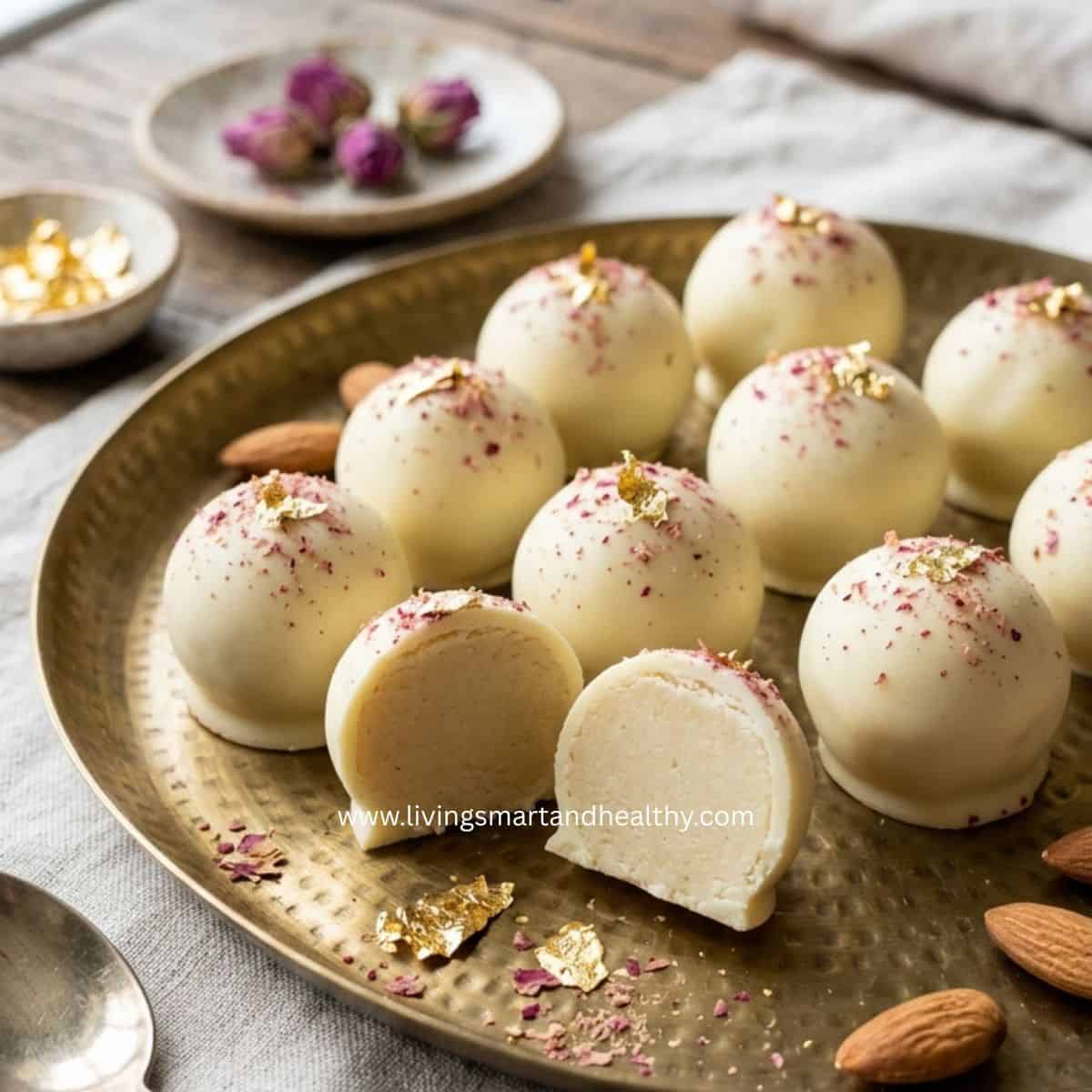
If you love the rich, saffron-scented flavor of traditional badam halwa, these Badam Halwa Truffles are a fun and delicious twist. Made with smooth almond flour halwa, rolled into bite-sized balls, and dipped in creamy white chocolate, they turn a classic Indian sweet into an elegant, party-ready dessert. Each bite is rich, nutty, and just the right size to enjoy or share.
These truffles are naturally gluten-free and egg-free, with simple ingredients and an easy, make-ahead preparation. They are perfect for your Diwali dessert platter, festive gatherings, or homemade edible gifts for friends and family. Best of all, you get the comforting taste of badam halwa in a beautiful little treat that looks as good as it tastes.
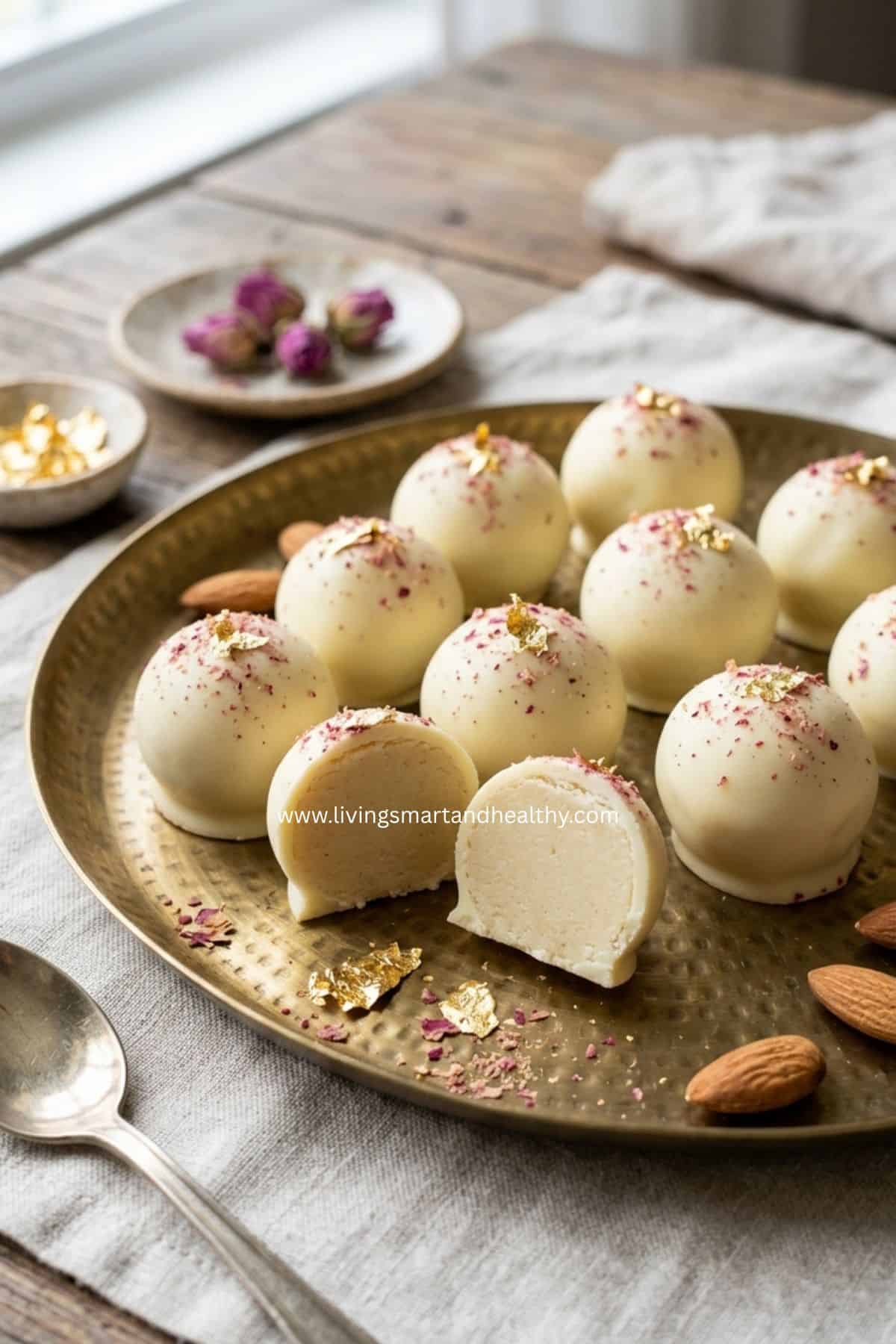
Badam halwa is one of those classic Indian sweets that feels perfect for festivals and special occasions. I love its rich almond flavor, the aroma of ghee, and the hint of saffron that makes every bite feel special. Traditional badam halwa takes time to prepare, but with almond flour, you can enjoy those familiar flavors without all the extra work.
Almond flour is one of my favorite ingredients for making quick, delicious sweets, especially during the busy festive season. I use it in so many treats, including Badam Burfi, Coconut Almond Cookies, Almond Mathris, Almond Crackers, and Almond Flour Peanut Butter Cookies. These Badam Halwa Truffles are a fun twist on the traditional sweet, with all that comforting almond flavor wrapped in a delicious chocolate coating. They look elegant enough for a festive dessert platter but are simple enough to make whenever you're craving something sweet.
Jump to:
Why You'll Love These Badam Halwa Truffles
- Simple ingredients: Almond flour, ghee, milk, sugar, saffron, and cardamom make the halwa. Chocolate does the rest.
- Quick and easy: Almond flour skips the long roasting that traditional badam halwa needs, so the base cooks in about 12 minutes.
- Make-ahead friendly. Prepare the halwa in advance and chill it overnight. The mixture firms up, making it easier to roll into smooth, bite-sized truffles.
- Great for gifting. These elegant little treats look lovely packed in a gift box with parchment paper, making them perfect for Diwali, holidays, and other special occasions.
- Easy to customize: Change the chocolate coating, add your favorite toppings, or adjust the sweetness to suit your taste.
Ingredients You'll Need
Almond flour: Choose finely ground almond flour. Almond meal is coarser and leaves the truffles grainy instead of smooth.
Ghee: This gives the halwa its nutty aroma and helps the mixture firm up as it chills.
Milk: Choice of milk, full-fat milk or low-fat milk, both work well. For dairy-free option, use a plant-based milk such as almond milk or coconut milk.
Sugar: Plain granulated sugar is fine, and brown sugar also works. Since the white chocolate coating is sweet, the halwa itself is made a little less sweet.
Saffron and cardamom: These two give the classic halwa flavor. A drop of rose water is a nice optional extra.
White chocolate: Melting chips or chocolate bark both work fine, just don't overcook either.
Toasted almonds, dried rose petals, and edible gold leaf: For crunch and a festive finish.

How to Make Badam Halwa Truffles
1. Prepare the sugar syrup
In a saucepan, combine milk, and sugar. Heat until the sugar dissolves completely, stirring occasionally. Turn off the heat and stir in the cardamom powder. Add a few saffron strands, if desired, for extra aroma and flavor. Set aside.
2. Roast the almond flour
Heat the ghee in a cast-iron pan or a nonstick pan over low to medium heat. Add the almond flour and roast for 2-3 minutes, stirring continuously, until fragrant. Avoid browning the almond flour.
3. Cook the badam halwa
Slowly add the prepared milk and sugar mixture to the roasted almond flour, stirring continuously to prevent lumps. Cook over low to medium heat for about 5-6 minutes, or until the mixture thickens and starts to leave the sides of the pan. Add the ghee and mix well until it is fully incorporated and the halwa comes together into a smooth mixture.
4. Cool and chill
Transfer the halwa to a plate or shallow bowl and let it cool completely. Cover and refrigerate for 1-2 hours, or overnight, until firm enough to roll into balls.
5. Shape the truffles
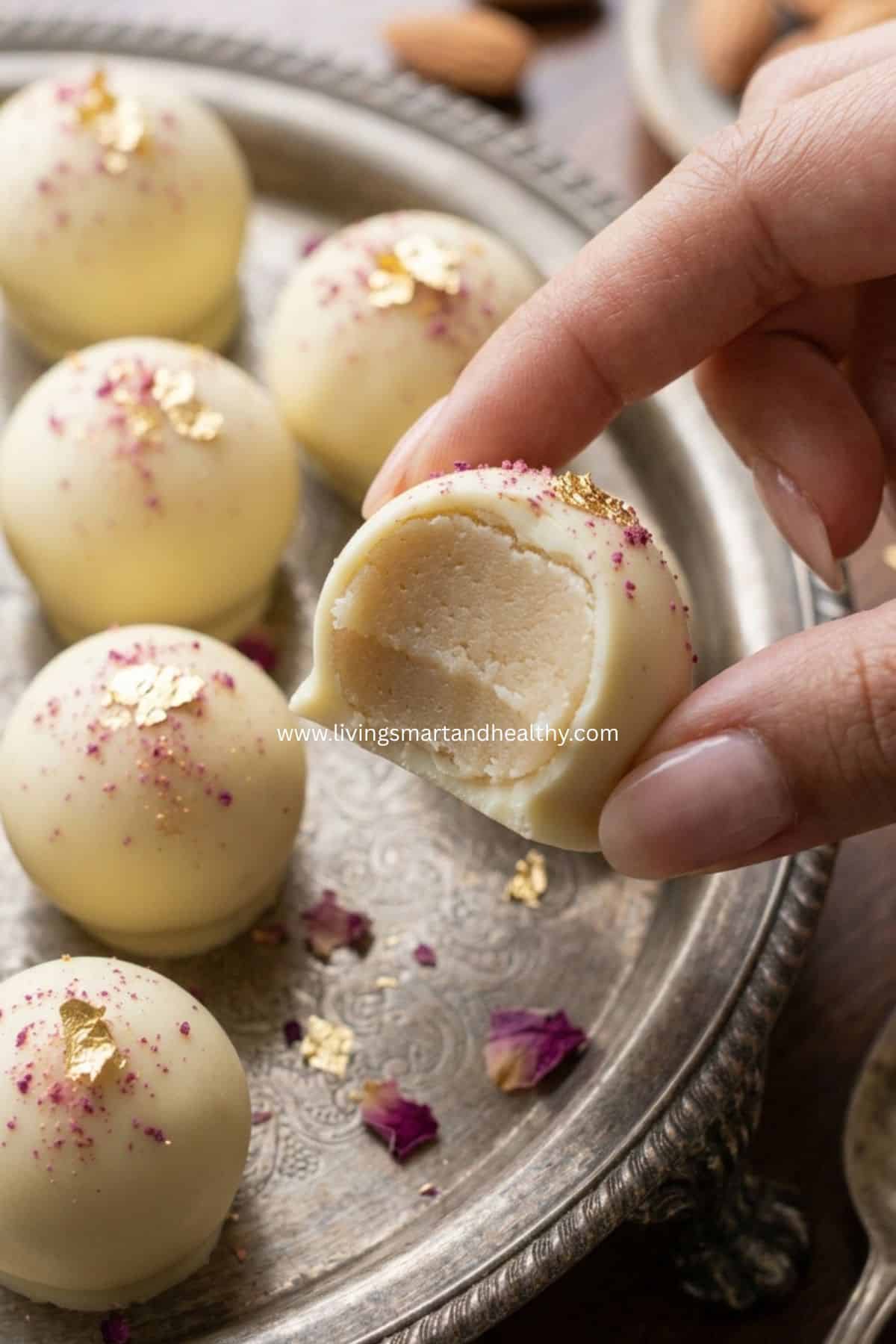
Once chilled, scoop small portions of the halwa and roll them between your palms to form smooth, bite-sized balls. Freeze it briefly while you melt the chocolate.
6. Melt the white chocolate
Chop the white chocolate and place it in a microwave-safe bowl. Microwave in 20-second intervals, stirring between each interval, until smooth. If needed, stir in a little coconut oil to thin the chocolate for easier dipping.
7. Dip the truffles
Using a wooden skewers, or dipping tool, dip each halwa ball into the melted white chocolate, coating it completely. Allow the excess chocolate to drip off, then place the truffle on a parchment-lined tray.
8. Garnish and set
While the chocolate is still wet, sprinkle the truffles with chopped almonds, pistachios, dried rose petals, or a few saffron strands, if desired. Refrigerate for 15-20 minutes, or until the chocolate coating is completely set.
Serve chilled or let the truffles sit at room temperature briefly before serving.
Tips for Perfect Badam Halwa Truffles
1. Use fine almond flour. Fine, blanched almond flour gives the halwa a smooth texture and a soft, melt-in-your-mouth center.
2. Chill the halwa thoroughly. Let the mixture cool completely, then refrigerate until firm. This makes the halwa easier to roll into neat, evenly shaped truffles.
3. Freeze before dipping. Place the shaped truffles in the freezer for 15-20 minutes before coating. The chilled centers help the chocolate set faster and create a neater finish.
4. Choose chocolate melting wafers. Melting wafers are convenient for dipping and typically don't require tempering. If using regular chocolate, temper it for a firm, glossy coating that holds up better at room temperature.
5. Adjust the sweetness. White chocolate adds plenty of sweetness, so you can adjust the sugar in the halwa to suit your taste. Start with ¼ cup of sugar and reduce it if you prefer a less-sweet truffle.
Variations
- Choose your chocolate: Swap white chocolate for milk or dark chocolate. Dark chocolate adds a richer, more intense flavor and balances the sweetness of the halwa.
- Coconut coating: Skip the chocolate dip and roll the chilled truffles in desiccated coconut for a simple, delicious finish.
- Add coconut to the halwa: Stir a little shredded coconut into the almond flour mixture for extra texture and a subtle coconut flavor.
- Dairy-free option: Replace the milk with almond milk, ghee with coconut oil, and use a dairy-free chocolate coating. The flavor and texture may vary slightly.
- Sugar substitute: Replace sugar with a granulated monk fruit sweetener or another sugar substitute, following the package conversion. Dissolve it in the warm milk. For a lower-sugar option, use sugar-free white chocolate wafers for the coating.
Make-Ahead and Storage
You can prepare the badam halwa a day ahead and refrigerate it overnight. The chilled halwa will be easier to roll into balls and dip in chocolate the next day.
Store the finished truffles in an airtight container in the refrigerator for up to 3 days for the best taste and texture. They are best enjoyed within 48 hours. If you use chocolate melting wafers, the coating should hold up well at room temperature for serving, but the halwa center will soften. For the freshest flavor and texture, I recommend making these truffles a day or two before the celebration.
Serving and Gifting Ideas
- Arrange on a platter with other mithai for a Diwali dessert table.
- Place in mini paper cups inside a small gift box
- Serve alongside chai or coffee after a festive dinner.
- Add them to a holiday cookie tray for a fun Indian twist.
Love Chocolate? Try these:
- Chocolate Fudge
- Hot Chocolate Sticks
- Chocolate Peppermint Bark
- Chocolate Babka
- Chocolate Zucchini Bread
Common Questions
Badam halwa is a rich Indian dessert made from almonds, ghee, sugar, and aromatics such as saffron and cardamom. This version uses almond flour so it cooks much faster than the traditional method.
It is not recommended. Almond meal is coarser, so the truffles will not be smooth.
Chill it longer. The ghee solidifies as it cools, and 15-20 more minutes in the refrigerator often fixes it.
Yes, but temper it first so it stays firm at room temperature. Melting wafers are easier.
About 20 truffles of 15 to 17 grams each.
Yes. Use a coconut oil as a substitute for the ghee, almond milk, and vegan white chocolate wafers.
The recipe uses no wheat flour, so it is naturally gluten free. Check your chocolate and add-ins for gluten-free labeling to be sure.
These badam halwa truffles take a dessert many of us grew up with and turn it into something polished enough for a party table or a gift box. If you make them, please leave a rating and a comment below, and tag me on Instagram so I can see your version.

Badam Halwa Truffles
Ingredients
- 3 tablespoons ghee divided
- 1 cup (100 g) fine almond flour
- 1 cup milk
- ⅓ cup (75 g) granulated sugar
- ½ teaspoon cardamom powder
- A pinch of saffron strands optional
- 200 g white chocolate melting wafers
For Garnish (Optional)
- 3-4 almonds, finely chopped
- 3-4 pistachios, finely chopped
- Few dried Rose petals
- 1 Edible gold leaf
Instructions
- In a saucepan, combine milk, and sugar. Heat until the sugar dissolves completely, stirring occasionally. Turn off the heat and stir in the cardamom powder. Add a few saffron strands, if desired, for extra aroma and flavor. Set aside.
- Heat the ghee in a cast-iron pan or a nonstick pan over low to medium heat. Add the almond flour and roast for 2-3 minutes, stirring continuously, until fragrant. Avoid browning the almond flour.
- Slowly add the prepared milk and sugar mixture to the roasted almond flour, stirring continuously to prevent lumps. Cook over low to medium heat for about 5-6 minutes, or until the mixture thickens and starts to leave the sides of the pan. Add the ghee and mix well until it is fully incorporated and the halwa comes together into a smooth mixture.
- Transfer the halwa to a plate or shallow bowl and let it cool completely. Cover and refrigerate for 1-2 hours, or overnight, until firm enough to roll into balls.
- Once chilled, scoop small portions of the halwa and roll them between your palms to form smooth, bite-sized balls. Freeze it briefly while you melt the chocolate.
- Chop the white chocolate and place it in a microwave-safe bowl. Microwave in 20-second intervals, stirring between each interval, until smooth. If needed, stir in a little coconut oil to thin the chocolate for easier dipping.
- Using a wooden skewers, or dipping tool, dip each halwa ball into the melted white chocolate, coating it completely. Allow the excess chocolate to drip off, then place the truffle on a parchment-lined tray.
- While the chocolate is still wet, sprinkle the truffles with chopped almonds, pistachios, dried rose petals, or a few saffron strands, if desired. Refrigerate for 15-20 minutes, or until the chocolate coating is completely set.
- Serve chilled or let the truffles sit at room temperature briefly before serving.
Notes
- Choose your chocolate: Swap white chocolate for milk or dark chocolate. Dark chocolate adds a richer, more intense flavor and balances the sweetness of the halwa.
- Coconut coating: Skip the chocolate dip and roll the chilled truffles in desiccated coconut for a simple, delicious finish.
- Add coconut to the halwa: Stir a little shredded coconut into the almond flour mixture for extra texture and a subtle coconut flavor.
- Dairy-free option: Replace the milk with almond milk, ghee with coconut oil, and use a dairy-free chocolate coating. The flavor and texture may vary slightly.
- Sugar substitute: Replace sugar with a granulated monk fruit sweetener or another sugar substitute, following the package conversion. Dissolve it in the warm milk. For a lower-sugar option, use sugar-free white chocolate wafers for the coating.
Nutrition
Disclaimer
Nutrition values are my best estimates. If you rely on them for your diet, use your preferred nutrition calculator.

Leave a Reply