
Gobi Paneer: Bold, smoky North Indian cauliflower & paneer sabzi - low carb, high protein, ready in 30 minutes.
You may also like: Instant Pot Aloo Gobi, Aloo Gobi Matar, Gobi Keema Matar, Soya Granules Gobi Matar, Gobi Matar Masala
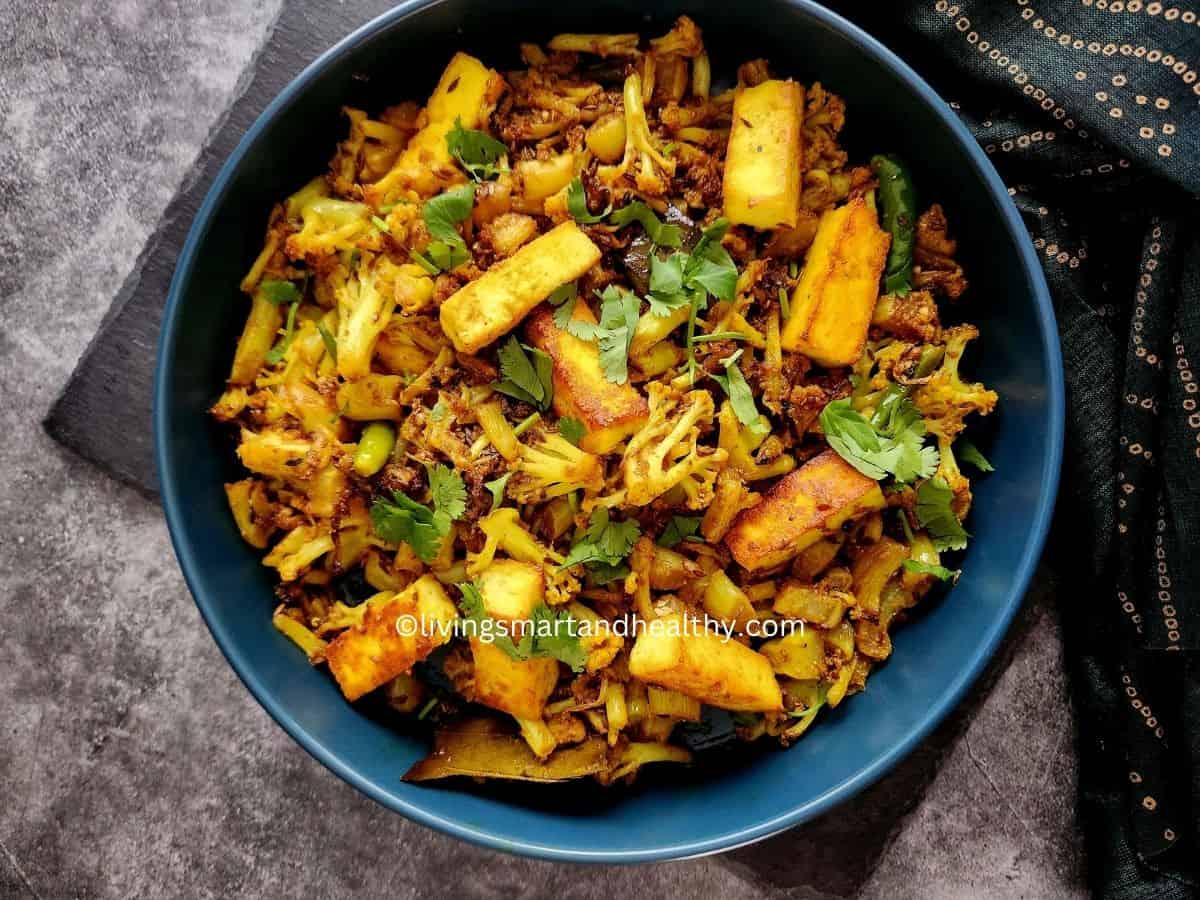
If there is one recipe that captures everything I love about Indian home cooking - bold spices, quick prep, zero compromise on flavor, it is this Gobi Paneer. Smoky mustard oil, whole spices crackling in the pan, golden paneer cubes folded into spiced cauliflower florets: this is the kind of sabzi that disappears from the plate before you even sit down.
What makes this version different? It is built for the way many of us actually want to eat - high in protein, low in carbs, and ready in 30 minutes on a weeknight. No tomatoes. No cream. No flour. Just whole ingredients, honest spices, and a technique that every North Indian kitchen runs on: smoking the mustard oil until it lightens in color and blooms into something nutty and aromatic.
With approximately 18 grams of protein and only 8 grams of net carbs per serving, this Gobi Paneer fits beautifully into low-carb, keto, and diabetic-friendly eating. It is naturally gluten-free, loaded with calcium, and most importantly, it tastes exactly like the real thing, because it is.
Looking for more recipes? Checkout Low Carb Indian Vegetarian recipes, 99+ Diabetes Friendly Indian recipes, 130+ Indian Vegan recipes, 35+ Instant Pot Indian recipes
Jump to:
Why You'll Love This Gobi Paneer
- High Protein: 250 g paneer delivers ~50 g protein across 3 servings - no supplements needed.
- Low Carb: Cauliflower has ~5 g net carbs per 100 g. Keto and diabetic-diet friendly.
- 30 Minutes: From fridge to table in half an hour. Weeknight-proof.
- Meal-Prep Gold: Tastes even better the next day. Lasts 3 days refrigerated
- Authentic Flavor: Smoked mustard oil + black cardamom = dhaba magic at home.
- Gluten-Free: No grains, no thickeners - 100% naturally gluten-free.
The Secret: Smoking the Mustard Oil
Mustard oil is the backbone of this recipe. It carries a pungent, almost horseradish-like heat when raw, but the moment you smoke it to the point where it turns pale golden and wisps of smoke curl up, that sharpness mellows into something nutty, rich, and beautifully aromatic. This is the technique North Indian and Bihari cooks have used for generations, and it is the single step that separates a good gobi paneer from a great one.
Pro Tip: How to Smoke Mustard Oil Correctly
Heat mustard oil on medium-high until it just begins to smoke and visibly lightens in color. This takes about 60-90 seconds. Turn on your exhaust fan, it will be pungent. Remove from heat for 30 seconds, then return to medium heat before adding spices.
Ingredient Notes
Cauliflower (Gobi)
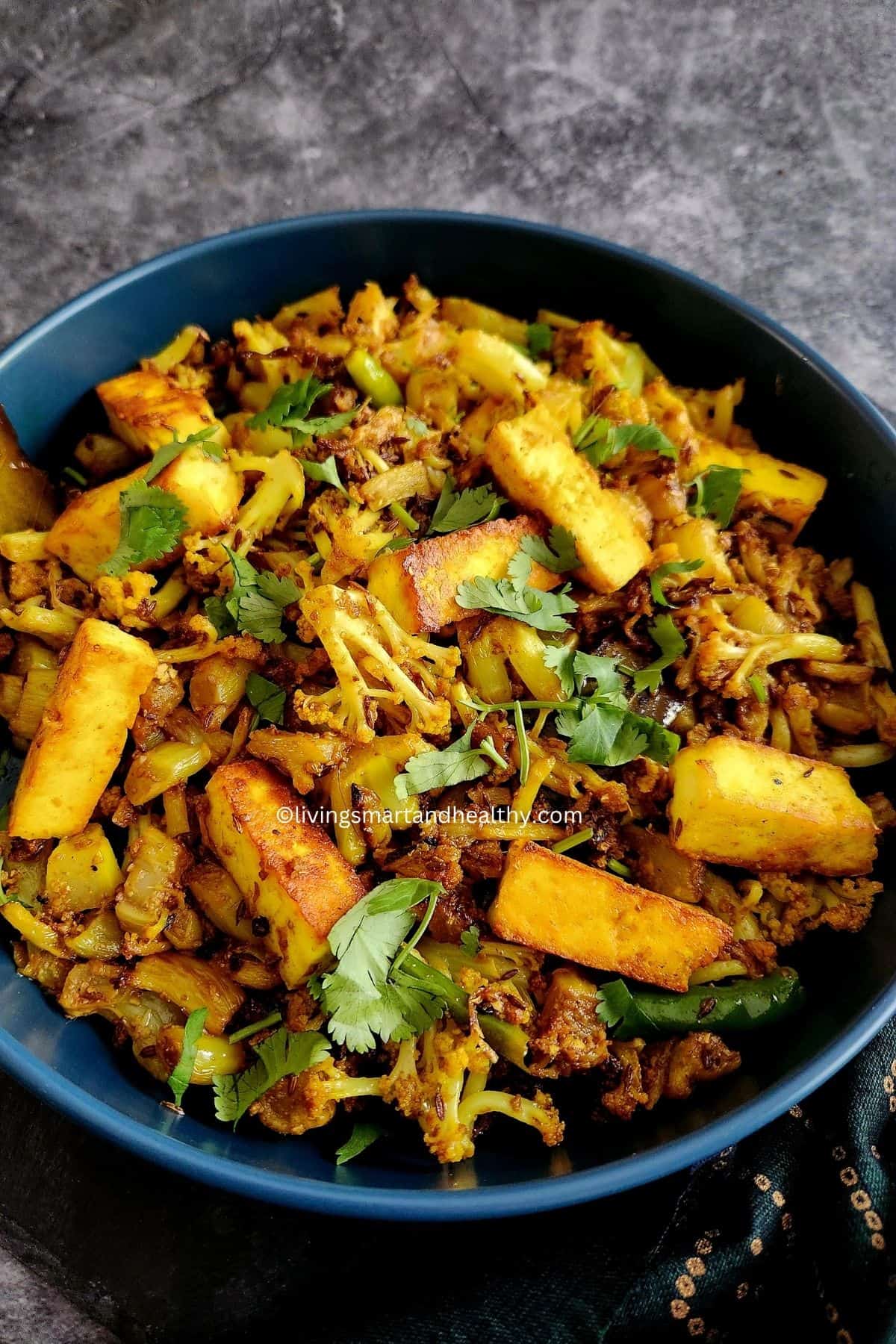
Choose a tight, creamy-white head with no dark spots. Cut florets to a consistent medium size - too small and they turn mushy, too large and the center stays raw. Pat dry before adding to the pan; excess moisture steams the gobi instead of searing it.
Paneer
Fresh homemade paneer is ideal, but a good-quality store-bought block works perfectly. If your paneer feels rubbery, soak cubes in warm salted water for 10 minutes before cooking, this rehydrates them and keeps them soft and pillowy rather than chewy.
Black Cardamom (Badi Elaichi)
Often overlooked in favour of green cardamom, black cardamom brings a camphor-like smokiness that is completely unique. It pairs beautifully with mustard oil and makes this dish taste like it came out of a clay pot over a wood fire. Remove before serving, not pleasant to bite into.
Amchur (Dry Mango Powder)
The secret finishing touch. Added at the very end, amchur brings a gentle fruity tartness that wakes up all the other spices and prevents the dish from tasting flat. No amchur? A small squeeze of fresh lemon at the end works in a pinch.
Pro Tips for the Best Gobi Paneer
- Use a wide kadai, cast iron skillet or a wide base pressure cooker (no pressure cooking) - don't crowd the pan. Gobi needs space to sear, not steam.
- Pan-fry paneer cubes separately in a little mustard oil until golden before adding. Those crisped edges soak up spices beautifully.
- This is a sukhi (dry) sabzi. Resist adding water, it should have slightly charred edges, not a gravy.
- Rest the sabzi 2-3 minutes off heat before serving. Residual heat finishes the paneer gently and spices bloom further.
- Always remove the bay leaves and black cardamoms before serving, they are for flavor only, not eating.
- Add amchur and garam masala only at the very end, heat destroys their top notes if added too early.
Avoid This Common Mistake
Adding water when the gobi starts to stick is the most common error. Instead, lower the heat and stir gently, the florets will release their own moisture and unstick naturally.
Serving Suggestions
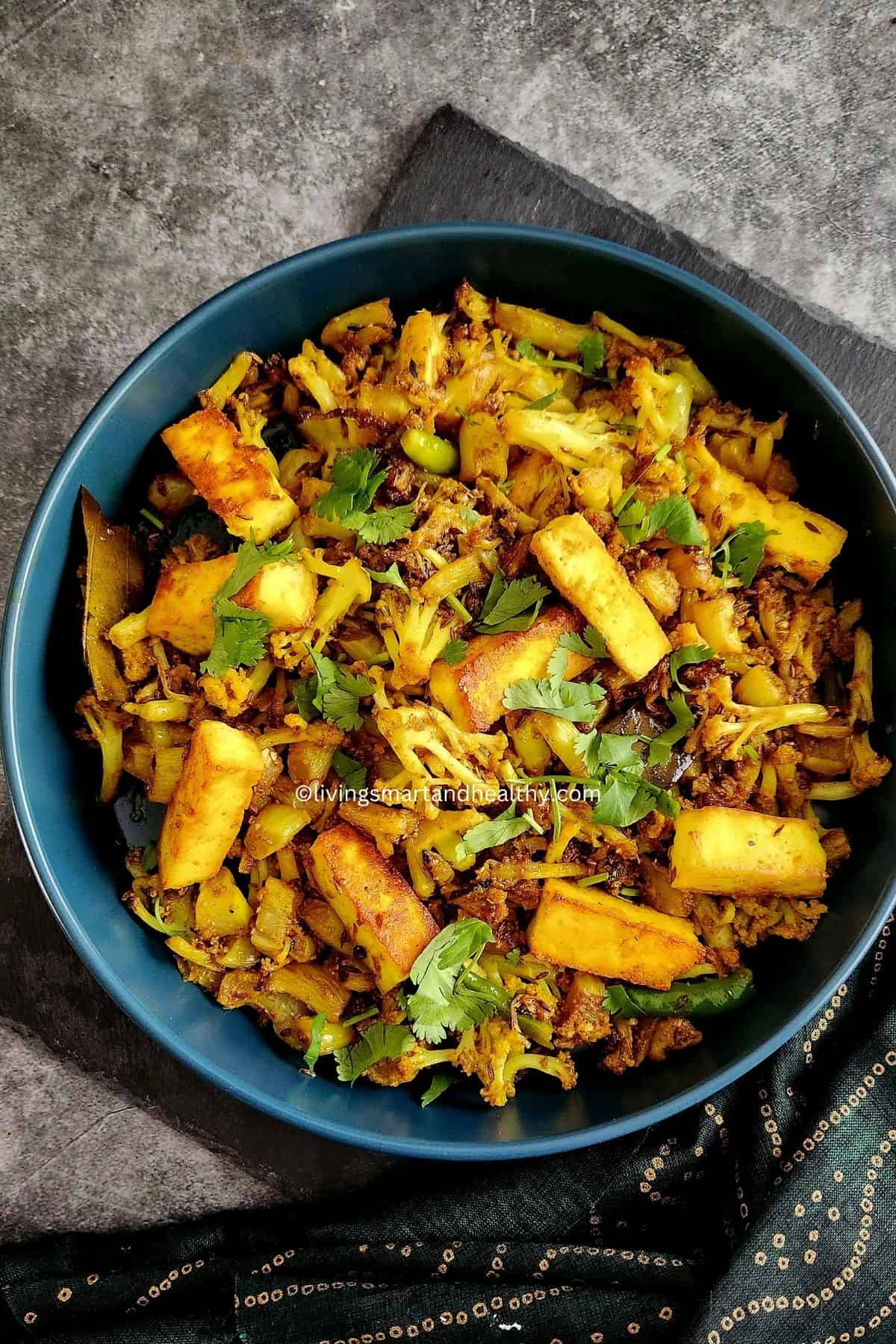
Gobi Paneer is wonderfully versatile. Here is how I love to serve it:
Classic: Warm whole wheat phulkas or missi roti, a bowl of dal, and sliced onions with lime.
Low-Carb / Keto: Eat it straight as a protein bowl topped with a generous spoonful of hung curd (Greek yoghurt). No bread needed.
Festive Thali: Pair with dal makhani, jeera rice, raita, and papad for a full North Indian spread.
Storage & Meal Prep
Refrigerator: Store in an airtight container for up to 3 days. Reheat in a dry pan over medium heat to revive the seared edges, avoid the microwave if possible, as paneer can turn rubbery.
Freezer: Not recommended. Paneer becomes grainy and cauliflower turns mushy after freezing and thawing.
Meal prep tip: You can cut the cauliflower and cube the paneer a day ahead, storing them separately in the fridge. Day-of cooking takes just 20 minutes.
Frequently Asked Questions
Yes, ghee or avocado oil are the best substitutes. You will lose the distinctive smoky pungency of mustard oil, but the dish will still be delicious.
Yes. With only ~8 g net carbs per serving (from cauliflower) and ~18 g protein and ~22 g fat, the macros fit well within standard keto targets. Use full-fat paneer for best results.
Technically yes, but fresh is strongly preferred. Frozen florets release extra water as they cook, making the sabzi steam instead of sear. If using frozen, thaw completely and pat very dry before cooking.
Two tips: (1) soak cubes in warm salted water for 10 minutes before cooking to rehydrate them, and (2) add paneer only in the last 4 minutes of cooking, overcooked paneer is the main cause of rubbery texture.
Aloo Gobi uses potato (aloo) instead of paneer, making it starchier and higher in carbs. Gobi Paneer replaces potato with paneer, dramatically increasing protein and reducing the carb load, while keeping the same spice profile.
Did You Make This Gobi Paneer?
I'd love to see it! Tag @livingsmartandhealthy on Instagram or leave a review below- it helps more people find this recipe.
You Might Also Love

Gobi Paneer (Low Carb, High Protein)
Equipment
Ingredients
- 400 grams cauliflower cut into medium florets
- 250 grams paneer cubed
- 3 tablespoons mustard oil
- 1 teaspoons cumin seeds
- 1 pinch asafoetida hing
- 1 bay leaves
- 1 black cardamoms
- 1.5 teaspoons grated ginger
- 2 green chilies slit
- 0.5 teaspoons turmeric powder
- 0.5 teaspoons red chili powder
- 2 teaspoons coriander powder
- 0.5 teaspoons amchur dry mango powder
- 0.5 teaspoons garam masala
- salt to taste
Instructions
Stovetop Gobi Paneer Sabzi
- Heat mustard oil in a pan until it reaches its smoking point. Reduce the heat slightly.
- Add bay leaf, black cardamom, cumin seeds, and asafoetida. Sauté for a few seconds until fragrant. Add the chopped ginger and green chilies and sauté for 30 seconds.
- Stir in turmeric powder, followed by the cauliflower florets. Mix well to coat the cauliflower with the spices. Cook on high heat for 3-5 minutes, stirring occasionally.
- Add salt and cook on high heat for 2-3 minutes to allow excess moisture to evaporate.
- Add coriander powder, amchur, and red chili powder. Mix well and cook on medium-high heat until the cauliflower is tender but still has a slight bite, stirring occasionally.
- In a separate pan, heat a little oil and lightly sauté the paneer cubes until golden. Add the paneer to the cauliflower mixture.
- Cook for another 2-3 minutes so the flavors meld together.
- Finish with garam masala and fresh cilantro. Mix gently and serve hot.
Air Fryer Gobi Paneer
- Preheat the air fryer to 375°F (190°C).
- Heat mustard oil in a small pan until it begins to smoke lightly. Reduce the heat and add the bay leaf, black cardamom, cumin seeds, and hing. Sauté for a few seconds until fragrant. Add the chopped ginger and green chilies and sauté for 30 seconds.
- Add turmeric powder, coriander powder, and red chili powder. Stir quickly and turn off the heat.
- Place the cauliflower florets in a large bowl. Pour the tempered mustard oil and spice mixture over the cauliflower, add salt to taste, and toss until evenly coated.
- Transfer the cauliflower to the air fryer basket and cook at 375°F (190°C) for 10 to 12 minutes, shaking the basket halfway through cooking.
- Add the paneer cubes and amchur powder. Toss gently and continue air frying for 5 to 7 minutes, or until the cauliflower is tender with lightly crisp edges and the paneer is golden.
- Sprinkle garam masala over the gobi paneer and toss gently.
- Garnish with fresh cilantro and serve hot.
Notes
- For extra-crispy paneer, air fry the paneer separately for 3 to 4 minutes before adding it to the cauliflower.
- Do not overcrowd the air fryer basket. Cook in batches if needed.
- A squeeze of fresh lemon juice before serving adds a bright, fresh flavor.
Nutrition
Disclaimer
Nutrition values are my best estimates. If you rely on them for your diet, use your preferred nutrition calculator.


Leave a Reply
You must be logged in to post a comment.