
Sambar is one of those dishes that feels like a warm hug in a bowl - tangy, spicy, and deeply comforting in every spoonful. This one pot sambar recipe brings all that rich, slow-cooked flavor to your table in just 30 minutes, with the dal and vegetables pressure cooked together so you get maximum flavor with minimum effort and cleanup.
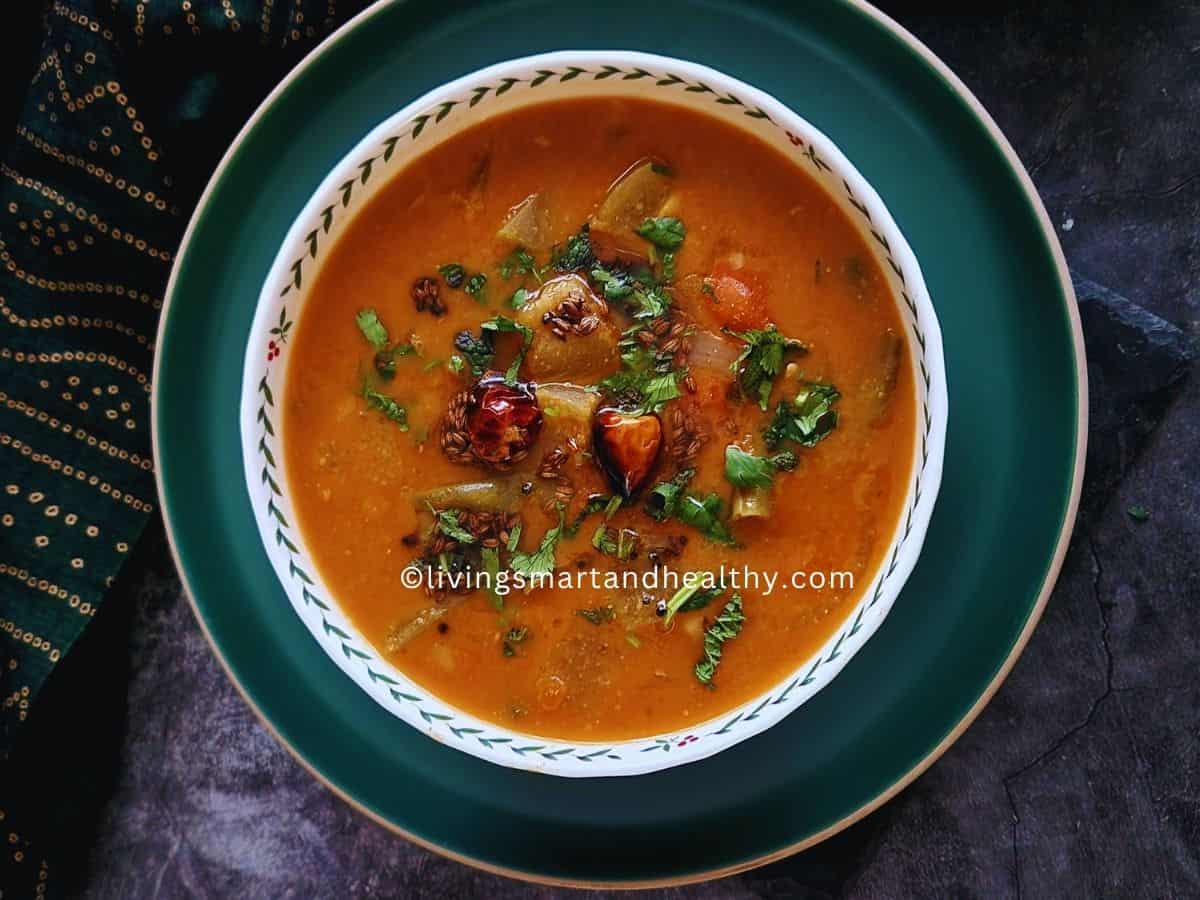
Sambar is the heart of South Indian cooking - a rich, tangy lentil and vegetable stew that makes every meal feel complete, whether served with idli, dosa, or a simple bowl of rice. This one pot sambar recipe uses a pressure cooker or Instant Pot to cook the dal and vegetables together, cutting the time and dishes in half without losing any of that deep, slow-cooked flavor.
Jump to:
- What Is Sambar?
- Why You Will Love This Recipe
- Ingredients
- Choosing the Right Dal
- Which Vegetables Work Best?
- Prep For Sambar
- How to Make One Pot Sambar - Stovetop Pressure Cooker
- Instant Pot Sambar
- Pro Tips for the Best Sambar
- Sambar Variations
- What to Serve with Sambar
- Storage and Reheating
- Frequently Asked Questions
- One Pot Sambar Recipe (Pressure Cooker + Instant Pot)
What Is Sambar?
Sambar is the soul of South Indian cooking. It is a deeply flavorful lentil and vegetable stew seasoned with tamarind, tomatoes, and the star ingredient - sambar powder. Whether it lands on your plate alongside steaming idli, crispy dosa, medu vada, or just a bowl of plain rice, sambar turns any meal into something that feels like home.
Traditionally, sambar is made in multiple pots and stages: dal cooked separately, vegetables simmered in their own pot, everything brought together and simmered again. That method is wonderful, but on a busy weekday you want something faster. This one pot version cooks the dal and vegetables together in a single pressure cooker or Instant Pot, cutting the time and the dishes in half, without sacrificing a single bit of flavor.
Why You Will Love This Recipe
- True one pot cooking - dal and vegetables pressure cook together, no babysitting two pots
- Quick and weeknight-friendly - ready in about 30 minutes start to finish
- Protein-packed and nutritious - toor dal is a powerhouse, and the mixed vegetables make this a complete meal
- Deeply flavorful - the tempering of mustard seeds, curry leaves, dried red chili, and asafoetida (hing) added at the end does all the heavy lifting
- Flexible - use whatever vegetables you have on hand
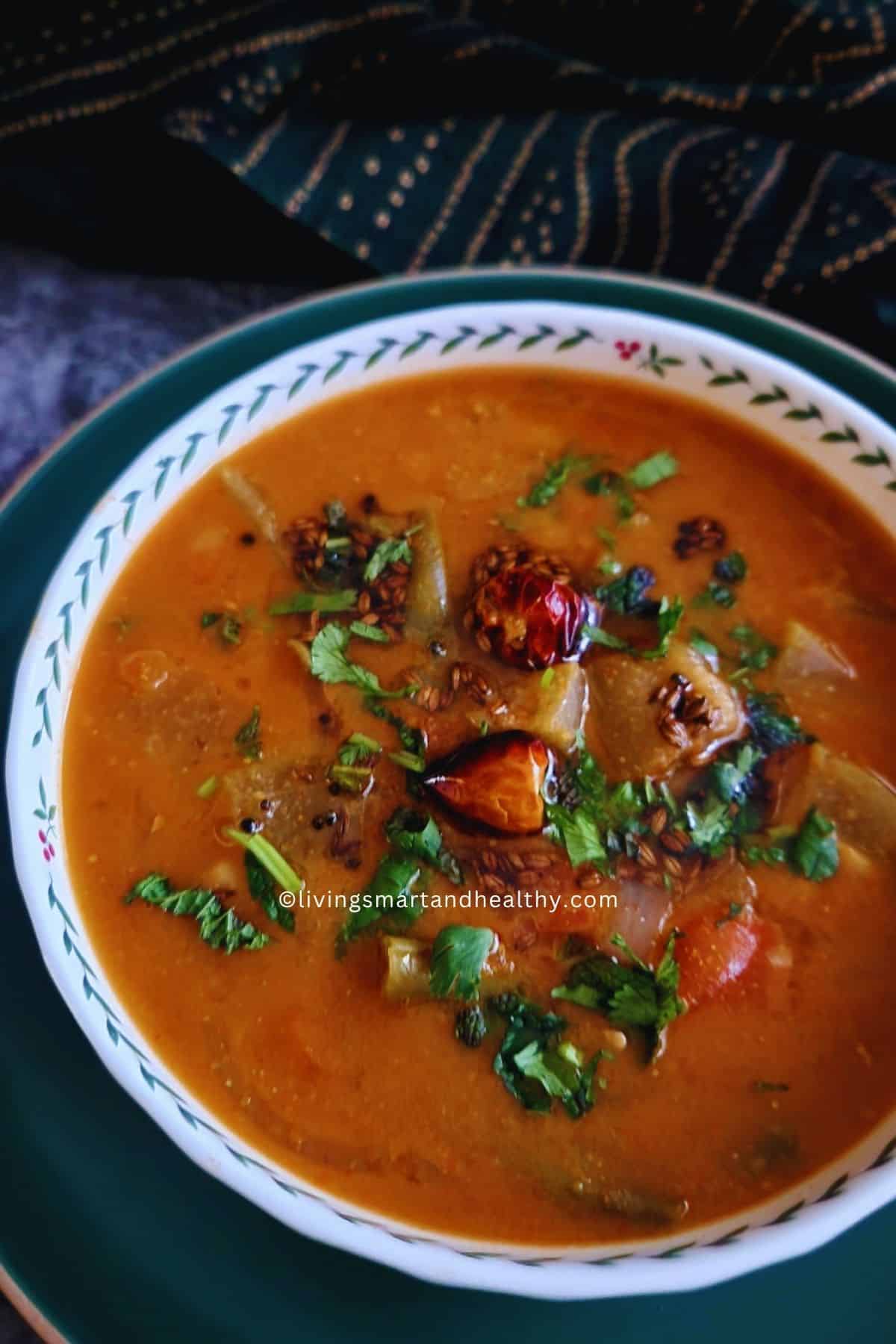
Ingredients
For the Dal and Vegetables
- ¾ cup toor dal (pigeon pea lentils), rinsed well
- 1 medium onion, diced (or 12-15 shallots, peeled and halved)
- 2 medium tomatoes, roughly chopped
- 1-2 drumsticks (moringa), cut into 3-inch pieces
- 1 medium carrot, cut into 1-inch cubes
- 2-3 okra (bhindi), cut into 1-inch pieces
- ½ cup red pumpkin or eggplant (optional but traditional)
- 2 tablespoons tamarind paste (or a small lemon-sized ball of tamarind soaked and extracted)
- 1½ to 2 tablespoons sambar powder (store-bought or homemade)
- ½ teaspoon turmeric powder
- 1 teaspoon red chili powder (adjust to taste)
- 1 teaspoon salt (adjust)
- 3 cups water (for pressure cooking)
For the Tempering (Tadka)
- 2 tablespoons ghee or oil
- 1 teaspoon mustard seeds
- ½ teaspoon cumin seeds
- 1 dried red chili, broken in half
- 10-12 fresh curry leaves
- 2 garlic cloves, lightly crushed (optional)
- ¼ teaspoon asafoetida (hing)
Choosing the Right Dal
The type of dal you use shapes the texture and flavor of the sambar:
- Toor dal only - the classic choice; gives a thick, creamy body with a mildly earthy flavor.
- Toor + moong dal (½ cup + ¼ cup) - lighter and slightly sweeter; great for everyday cooking.
- Toor + masoor dal (equal parts) - this combination is the secret to restaurant or hotel-style sambar. Masoor cooks quickly and creates a beautifully smooth, rich consistency.
Whichever combination you choose, always rinse the lentils well until the water runs clear.
"The secret to restaurant-style sambar is using equal parts toor dal and masoor dal. Masoor cooks down into a silky, smooth consistency that gives you that velvety, pourable texture you can never quite replicate with toor dal alone."
Which Vegetables Work Best?
One of the joys of sambar is its flexibility. You can rotate vegetables based on the season or what is sitting in your fridge. Excellent choices include:
- Drumstick (moringa) - the most classic sambar vegetable; adds a subtle sweetness and herbal note
- Pearl onions / shallots - sweeter and more aromatic than regular onion
- Tomato - essential for the tangy, jammy base
- Carrot - adds color and a gentle sweetness
- Eggplant (brinjal) - absorbs all the spiced flavors beautifully
- Red pumpkin - brings a slight sweetness and body
- Okra (bhindi) - adds a silky texture when pressure cooked
- Beans, potatoes, or bottle gourd - all work wonderfully
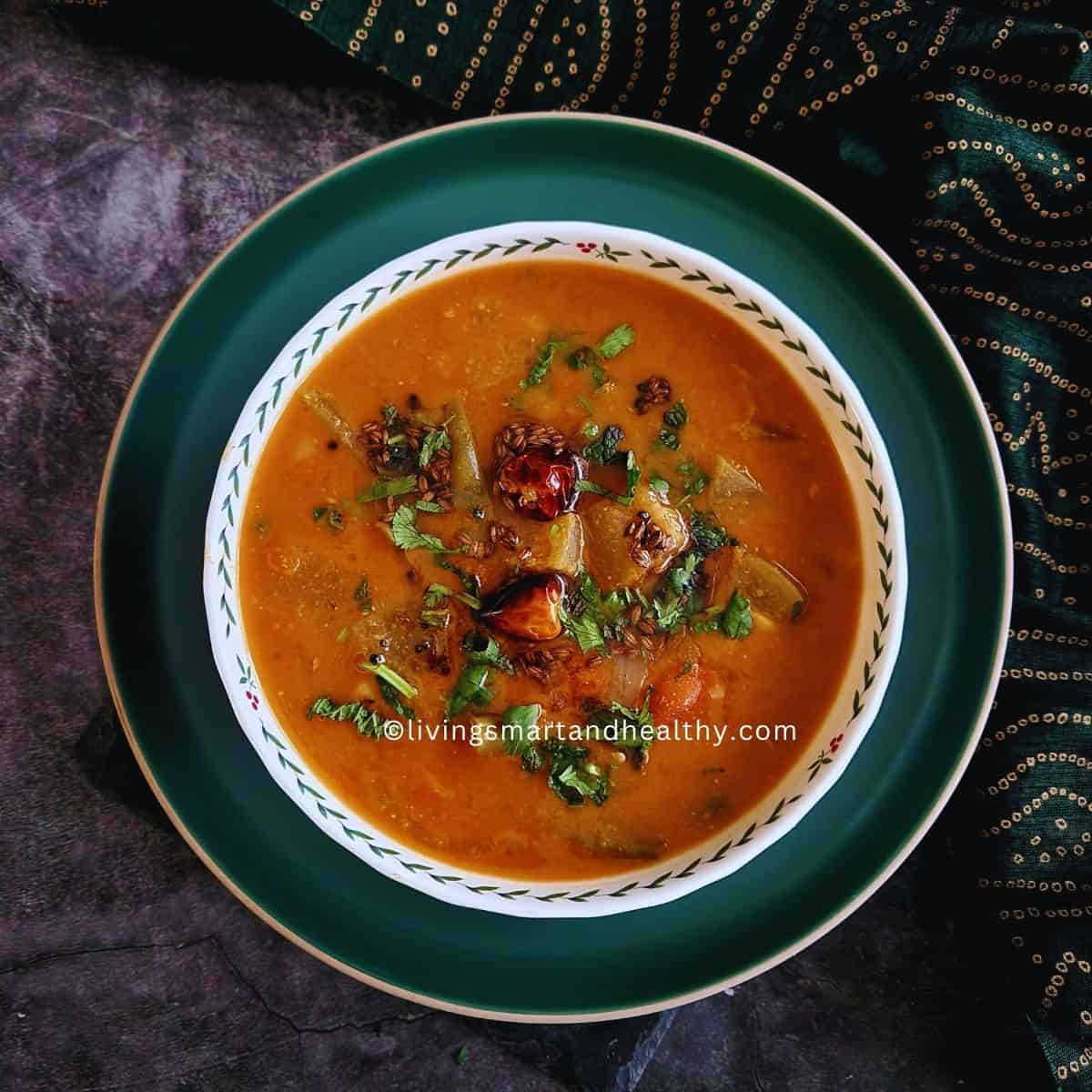
Prep For Sambar
Rinse the toor dal well and soak it in water for 20-30 minutes before cooking, this softens the lentils and helps them cook evenly, giving you a smoother, creamier sambar.
While the dal soaks, wash and chop all your vegetables, measure out the spices, and get the tamarind paste ready.
How to Make One Pot Sambar - Stovetop Pressure Cooker
Step 1: Combine Everything in the Cooker
Add the rinsed toor dal, all the chopped vegetables, onions, and tomatoes into the pressure cooker. Pour in the water. Add turmeric, red chili powder, sambar powder, and salt. Give everything a good stir so the spices are distributed evenly.
There is no need to sauté anything first - the pressure does the work of softening the vegetables and blooming the spices.
Step 2: Pressure Cook
Secure the lid and cook on medium-high heat for 3 to 4 whistles. Once the pressure releases naturally (about 10 minutes), open the lid.
Step 3: Mash and Simmer
Use a ladle or a whisk to gently mash the cooked dal into a smooth consistency. The dal should be completely soft and easy to break down. If the sambar looks too thick, add a splash of hot water and stir.
Add tamarind pulp and bring the sambar to a gentle simmer for 3-4 minutes on medium heat to let everything come together. Taste and adjust salt and tamarind at this point.
Step 4: Make the Tempering
In a small pan, heat the ghee or oil over medium-high heat. Once it shimmers, add the mustard seeds and let them splutter. Add the cumin seeds, dried red chili, and curry leaves - they will crackle and pop. Add the crushed garlic if using, fry for 30 seconds until lightly golden, then add the asafoetida.
Immediately pour this entire tempering over the simmering sambar. Cover the pot for a minute to let the aromas infuse, then stir and serve.
"Never skip the tempering and never rush it. That final sizzle of mustard seeds, curry leaves, and ghee poured over the sambar is not just a garnish - it is what separates a good sambar from an unforgettable one."
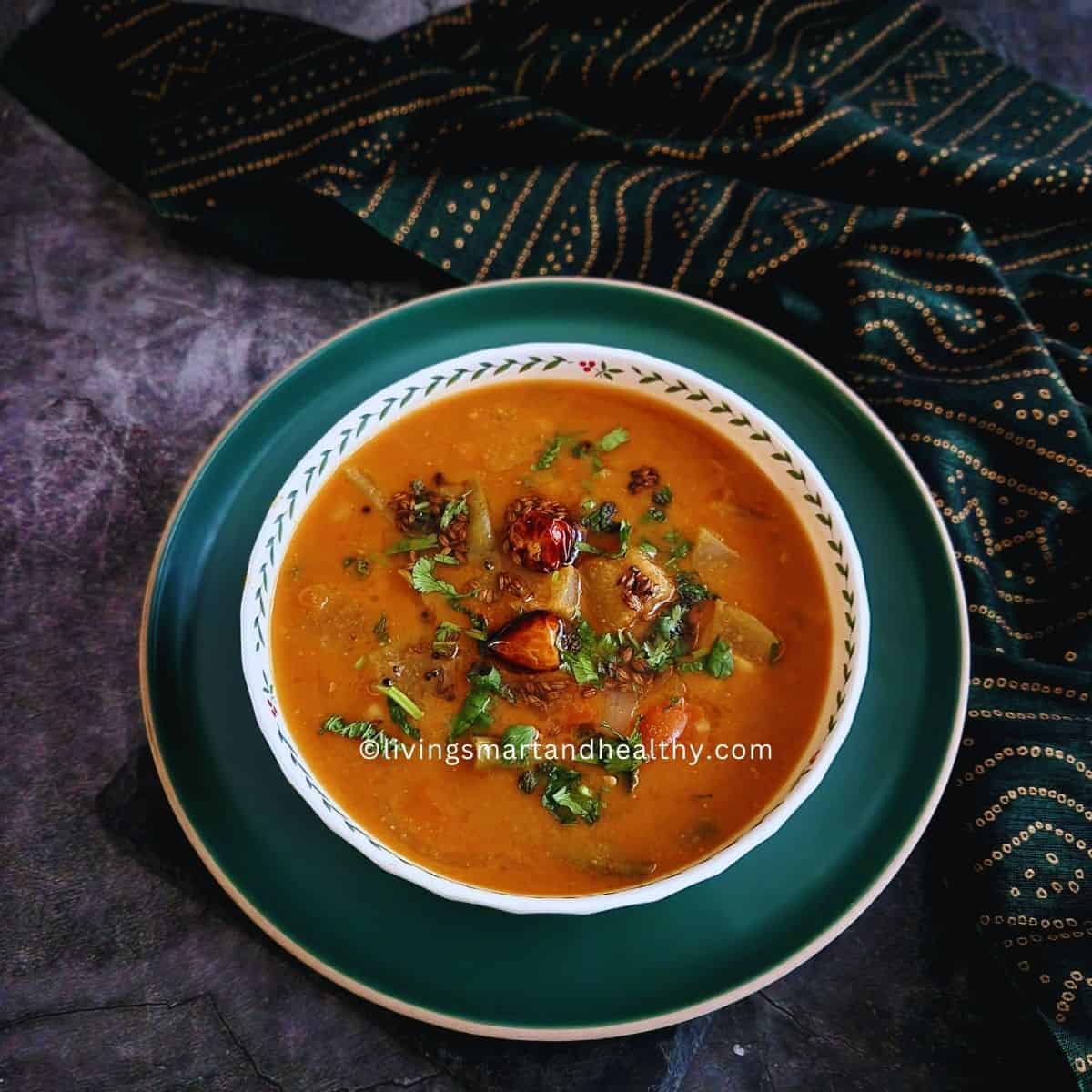
Instant Pot Sambar
Step 1: Add Everything to the Pot
Place the rinsed dal, all vegetables, onions, and tomatoes into the Instant Pot inner pot. Add water, turmeric, red chili powder, sambar powder, and salt. Stir to combine.
Step 2: Pressure Cook
Secure the Instant Pot lid and set the steam release valve to Sealing. Select Pressure Cook (High) and set the timer to 10 minutes.
Once cooking is complete, allow the pressure to release naturally for 10 minutes, then carefully switch the valve to Venting to release any remaining steam.
Step 3: Mash and Adjust
Open the lid. The dal should be completely soft and the vegetables tender. Use a ladle to mash the dal into a creamy consistency. Switch to Sauté mode on Normal heat, add tamarind pulp, and let the sambar simmer for 3-5 minutes, stirring occasionally. Add more water if needed to reach your preferred consistency.
Step 4: Make the Tempering
In a small pan on the stovetop (or use the Instant Pot's Sauté mode if you are comfortable working quickly), heat ghee or oil. Add mustard seeds and let them pop. Add cumin seeds, dried red chili, curry leaves, and optional crushed garlic. Fry for 30-45 seconds until aromatic. Finish with a pinch of asafoetida.
Pour the tempering over the sambar, cover for a minute, then stir and serve.
Pro Tips for the Best Sambar
On the sambar powder: The sambar powder you use matters enormously. If you have access to a fresh or homemade batch, use it - the difference in aroma is remarkable. Store-bought works perfectly well too; popular brands from Indian stores tend to be quite good.
On tamarind: Fresh tamarind extract gives the best tangy depth. If using a concentrate or paste, start with a smaller amount and taste as you go - concentrates vary in intensity.
On consistency: Sambar should be pourable but not watery. Mashing the dal well is what gives it body. If it is too thick after pressure cooking, add hot water - never cold water, which can make the sambar taste flat.
On the tempering: Do not skip or rush the tempering. This final step is what gives sambar its signature aroma. Use ghee if you can - the difference in flavor is noticeable.
On resting: Like most lentil dishes, sambar tastes even better after sitting for 15-20 minutes as the flavors continue to develop.
"Fresh sambar powder makes all the difference. If you have ten extra minutes while the dal cooks, dry roast and grind your spices fresh - the aroma alone will tell you why no store-bought powder can fully compete."
Sambar Variations
1. Drumstick Sambar (Murungakkai Sambar) The most classic version of all. Drumstick (moringa) pieces add a subtle sweetness and herbal depth that makes this the definitive South Indian sambar for most households.
2. Pearl Onion Sambar (Ulli Sambar) Whole shallots or pearl onions replace regular onion and cook down into sweet, jammy bites that beautifully balance the tangy tamarind broth. A Kerala staple.
3. Tomato Sambar No tamarind needed - ripe tomatoes do all the work. Lighter, quicker, and slightly sweeter than the classic version, this is a perfect everyday sambar.
4. Mixed Vegetable Sambar The most flexible version. Carrots, beans, eggplant, pumpkin, and okra all cook together in one pot for a hearty, nutritious sambar that works with whatever is in your fridge.
5. Radish Sambar (Mullangi Sambar) White radish (daikon) softens into tender, mildly peppery bites that soak up the spiced tamarind broth perfectly. A beloved Tamil Nadu classic, especially with plain rice.
6. Eggplant Sambar (Kathirikkai Sambar) Silky, melt-in-your-mouth eggplant chunks absorb every bit of the spiced tamarind dal. Rich, earthy, and deeply satisfying, a favorite in Andhra-style cooking.
7. Hotel Style Sambar The smooth, velvety sambar you get at South Indian tiffin centers. The secret is equal parts toor dal and masoor dal for a silky, pourable consistency that pairs perfectly with idli and dosa.
8. Moong Dal Sambar Lighter, gentler, and faster to cook than the classic toor dal version. Mild in flavor and easy on digestion, this is a great choice for a simple weeknight dinner.
9. No Tamarind Sambar Raw mango pieces, cranberry, or extra tomatoes replace tamarind for a fresher, gentler tang. Great for those who find tamarind too sharp, without compromising on flavor.
10. Coconut Sambar (Kerala Style) Freshly grated coconut or a splash of coconut milk stirred in at the end adds a creamy richness and subtle sweetness. Pairs beautifully with appam or Kerala red rice.
11. Udupi Sambar A Karnataka specialty sweetened with jaggery to balance the tamarind tang. Made without onion or garlic, with a coconut-forward spice powder that gives it a milder, rounder flavor unique to the Udupi region.
12. Arachuvitta Sambar Instead of sambar powder, a fresh paste of roasted coconut, red chilies, and spices is ground and stirred in. More effort, but the depth of aroma and flavor is unmatched this is the sambar grandmothers are legendary for.
What to Serve with Sambar
Sambar is one of the most versatile dishes in South Indian cuisine. Here are the most popular pairings:
- Idli sambar - the classic South Indian breakfast combination
- Dosa sambar - plain dosa or masala dosa with a bowl of sambar on the side
- Vada sambar - medu vada soaked in sambar, garnished with onion and cilantro
- Rice and sambar - short grain rice with sambar and a stir-fried vegetable on the side; simple and deeply satisfying
- Pongal - ven pongal (savory rice and lentil porridge) served with sambar is a beloved breakfast plate
- Upma - beloved South Indian breakfast
- Sambar with chapati - less traditional but surprisingly good for a weeknight dinner
Storage and Reheating
Sambar stores beautifully and arguably tastes best the next day. Keep it in an airtight container in the refrigerator for up to 3-4 days. Reheat on the stovetop over medium heat, adding a small splash of water to loosen it up, as it thickens considerably when cold. It can also be frozen for up to 1 month.
Frequently Asked Questions
Sambar is made with toor dal (pigeon pea lentils) cooked with vegetables like drumstick, eggplant, carrot, and pearl onions in a tamarind and tomato base. It is seasoned with sambar powder, a blend of roasted spices and lentils and finished with a tempering of mustard seeds, curry leaves, and ghee.
Sambar is most commonly served with idli, dosa, medu vada, or plain rice as part of a traditional South Indian meal. It also pairs wonderfully with pongal, chapati, or simply as a light soup on its own.
Sambar has a complex, layered flavor that is simultaneously tangy from tamarind, savory from the lentils, mildly spicy from the sambar powder, and earthy from the vegetables. The ghee tempering adds a rich, aromatic finish that ties all the flavors together into something deeply comforting.
Sambar is arguably more nutritious than plain dal because it combines protein-rich lentils with fiber-packed vegetables, tamarind, and anti-inflammatory spices like turmeric and cumin all in one bowl. It is low in calories, naturally gluten-free, and a well-rounded dish that delivers protein, vitamins, and minerals in a single serving.
Tried this recipe? It pairs beautifully with fluffy idli or a crispy dosa on a slow weekend morning. Once you get the hang of the one pot method, you may never go back to the multi-pot version.

One Pot Sambar Recipe (Pressure Cooker + Instant Pot)
Equipment
Ingredients
- ¾ cup toor dal rinsed well (or ½ cup toor dal + ¼ cup moong dal or masoor dal)
- 1 medium onion diced (or 12-15 shallots, peeled and halved)
- 2 medium tomatoes roughly chopped
- 1-2 drumsticks moringa, cut into 3-inch pieces
- 1 medium carrot cut into 1-inch cubes
- 2-3 okra cut into 1-inch pieces
- ½ cup red pumpkin or eggplant diced (optional)
- 3 cups water plus more as needed
Spices and Seasoning
- 1½ to 2 tablespoons sambar powder
- ½ teaspoon turmeric powder
- 1 teaspoon red chili powder
- 2 tablespoons tamarind paste
- 1 teaspoon salt adjust to taste
Tempering
- 2 tablespoons ghee or oil
- 1 teaspoon mustard seeds
- ½ teaspoon cumin seeds
- 1 dried red chili broken in half
- 10-12 fresh curry leaves
- 2 garlic cloves lightly crushed (optional)
- ¼ teaspoon asafoetida hing
Instructions
Prep For Sambar
- Rinse the toor dal well and soak it in water for 20-30 minutes before cooking, this softens the lentils and helps them cook evenly, giving you a smoother, creamier sambar.
- While the dal soaks, wash and chop all your vegetables, measure out the spices, and get the tamarind paste ready.
Stovetop Pressure Cooker Sambar Recipe
- Add dal, all chopped vegetables, onions, and tomatoes to the pressure cooker. Pour in 3 cups water. Add turmeric, red chili powder, sambar powder, and salt. Stir well to combine.
- Close the lid and pressure cook on medium-high heat for 3 to 4 whistles. Allow pressure to release naturally for about 10 minutes.
- Open the lid and mash the dal using a ladle or a whisk until smooth and creamy. Add a splash of hot water if the sambar is too thick.
- Add tamarind pulp and bring to a gentle simmer on medium heat for 3-4 minutes. Taste and adjust salt and tamarind.
- Heat ghee or oil in a small pan. Add mustard seeds and let them splutter. Add cumin seeds, dried red chili, curry leaves, and garlic. Fry for 30-45 seconds. Add asafoetida and immediately pour the tempering over the sambar.
- Cover for 1 minute to let the aromas infuse. Stir and serve hot.
Instant Pot Sambar Recipe
- Add dal, all chopped vegetables, onions, and tomatoes to the Instant Pot. Pour in 3 cups water. Add turmeric, red chili powder, sambar powder, and salt. Stir to combine.
- Secure the lid and set the steam release valve to Sealing. Select Pressure Cook on High and set the timer to 10 minutes.
- Once cooking is complete, allow natural pressure release for 10 minutes, then carefully switch the valve to Venting to release remaining steam.
- Open the lid and mash the dal well. Switch to Sauté mode on Normal heat, add tamarind paste, and simmer for 3-5 minutes, stirring occasionally. Add water as needed to adjust consistency.
- Heat ghee or oil in a small pan. Add mustard seeds and let them splutter. Add cumin seeds, dried red chili, curry leaves, and garlic. Fry for 30-45 seconds. Finish with asafoetida and pour the tempering over the sambar.
- Cover for 1 minute, stir well, and serve hot.
Notes
- Dal tip: Use equal parts toor dal and masoor dal for a smooth, velvety hotel-style sambar.
- Tamarind: Start with 1½ tablespoons and add more to taste. Strength varies by brand.
- Sambar powder: Homemade gives the best flavor. Store-bought works well too.
- Consistency: Mash the dal thoroughly for a thick, creamy body. Add hot water to thin if needed.
- Vegan option: Replace ghee with coconut oil or any neutral oil in the tempering.
- Storage: Refrigerate in an airtight container for up to 4 days. Freeze for up to 1 month.
- Reheating: Reheat on stovetop with a splash of water as sambar thickens when cold.
Nutrition
Disclaimer
Nutrition values are my best estimates. If you rely on them for your diet, use your preferred nutrition calculator.



Leave a Reply
You must be logged in to post a comment.