
Craving the creamy, saffron-kissed sweetness of basundi but don't have an hour to stand over the stove? This basundi recipe comes together in just 35 minutes and tastes just like the authentic version served at Indian festivals and celebrations. No long simmering, no constant stirring just rich, velvety, perfectly spiced sweet milk.
Whether you're making it for Diwali, Holi a family gathering, or just a weeknight treat, this shortcut recipe delivers all the authentic flavor without the fuss.
Jump to:
- What Is Basundi?
- Basundi vs. Rabri - What's the Difference?
- Why You'll Love This Recipe
- Why This Recipe Uses Evaporated Milk
- Ingredients & Notes
- How to Make Basundi (Step-by-Step)
- Tips for Perfect Basundi
- Basundi Variations to Try
- Serving Suggestions
- Storage & Make-Ahead Tips
- Frequently Asked Questions
- Basundi Recipe
What Is Basundi?
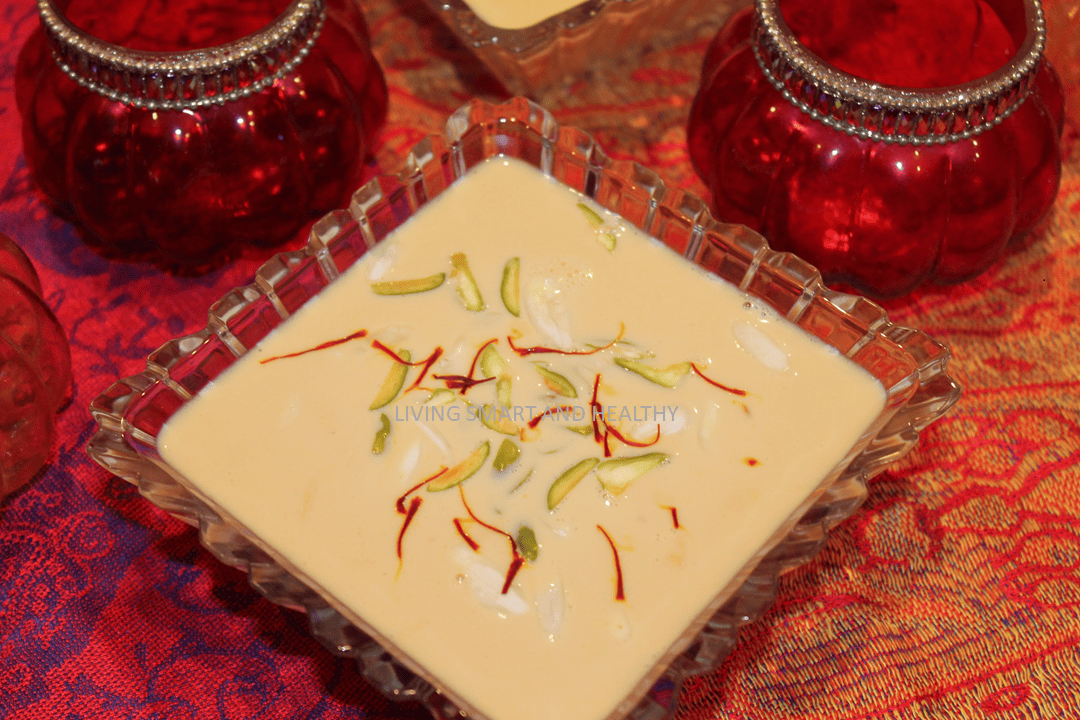
Basundi is a beloved sweet from the western part of India, particularly popular in Maharashtra and Gujarat. It's made with full-fat milk and sugar, slowly simmered until the milk reduces to about half its original volume and transforms into something deeply rich, creamy, and fragrant.
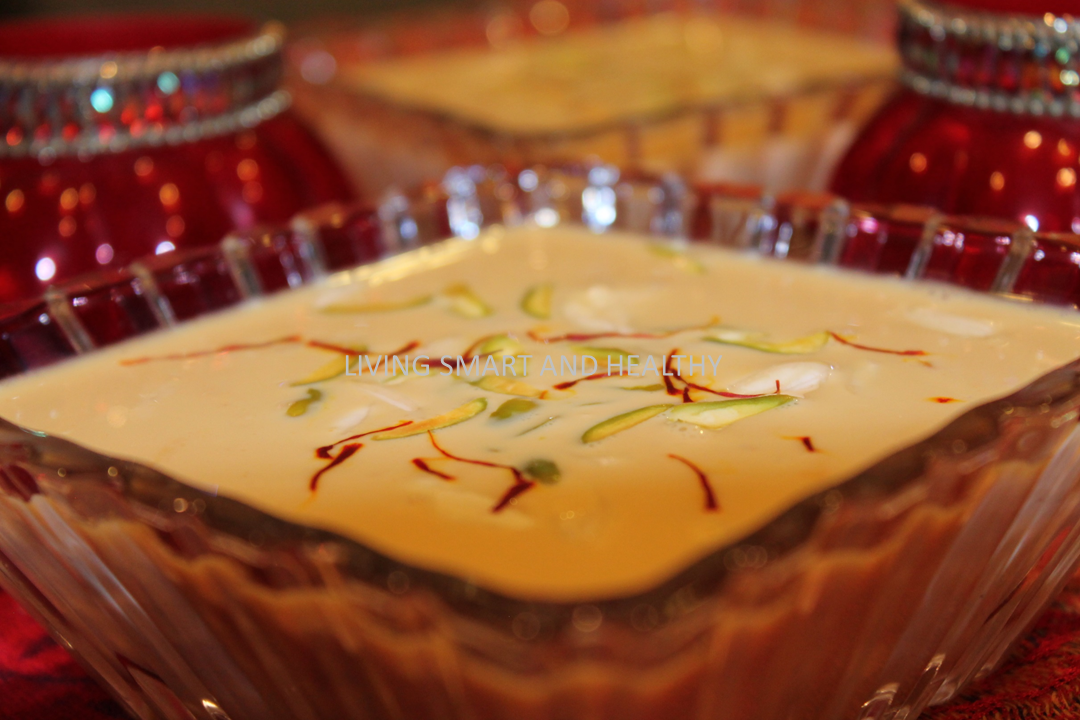
The reduced milk is then flavored with green cardamom powder and a few strands of saffron, and garnished with dry fruits like slivered almonds and pistachios.
Traditionally, basundi is served during festivals, celebrations, and special occasions. It is one of those desserts that feels both humble in its ingredients and indulgent in its flavor, the kind of thing that gets made when family comes together. The texture is creamy and flowing, almost like a pourable custard, which makes it easy to serve in small cups or bowls alongside other sweets.
Basundi vs. Rabri - What's the Difference?
Basundi and rabri (also called rabdi) are sister desserts, both are made from the same two ingredients, milk and sugar, using the same slow-simmering technique.
The difference comes down to how long you cook them, and that changes everything. Basundi is cooked until the milk reduces to about half its original volume. The result is creamy and flowing, with a light, pourable consistency. Rabri, on the other hand, is cooked all the way down to roughly a quarter of its original volume. That extra reduction gives rabri a much thicker, denser texture with a more concentrated, almost fudgy richness.
Regionally, basundi is most popular in western India - Maharashtra and Gujarat, while rabri has its roots in the north. They are served differently too: basundi is typically enjoyed on its own as a standalone dessert, while rabri is most often paired with other sweets, poured over hot gulab jamun, layered into malpua, or served alongside jalebi some of the classic Indian desserts.
The simple rule of thumb: reduce milk by half and you have basundi. Reduce it to a quarter and you have rabri.
Why You'll Love This Recipe
- quick
- authentic flavor
- no stirring
- make-ahead
Why This Recipe Uses Evaporated Milk
Traditional basundi is made with full-fat fresh milk simmered for 45-60 minutes until reduced by half. Evaporated milk is already concentrated and pre-cooked, which cuts that time dramatically, from an hour of constant stirring down to about 20-25 minutes. You still get that same creamy, rich texture, just without all the work. It's the secret behind this quick and easy recipe!
"Using evaporated milk is the shortcut that makes this recipe so quick. It's already concentrated, so you skip the long reduction time needed with fresh whole milk."
Ingredients & Notes
You only need a handful of pantry staples to make this basundi. Here's what you'll need and why each one matters:
- Evaporated Milk - The star of this shortcut recipe. Evaporated milk is already concentrated, so it reduces quickly into a thick, creamy basundi without the hour-long stovetop simmering. Use full-fat for the richest result.
- Sweetened Condensed Milk - This does double duty as both sweetener and thickener. Start with half a can and taste as you go, you can always add more, but you can't take it out! For a less sweet basundi, substitute 3-4 tablespoons of regular sugar.
- Cardamom Powder - The warm, floral backbone of this dessert. Freshly ground cardamom gives the best flavor, crack open 6-8 green cardamom pods and grind the seeds yourself if you have them.
- Saffron - Saffron gives basundi its signature golden hue and a subtle honey-like aroma. A little goes a long way. For a more pronounced color and flavor, bloom the saffron first: soak the strands in 1 tablespoon of warm milk for 5 minutes before adding.
- Ghee - A thin coating of ghee on the bottom and sides of the pot prevents the milk from scorching and sticking. Don't skip this step!
- Nuts for garnish - A handful of slivered almonds and pistachios. Added at the end for crunch and visual appeal. Toast them lightly in a dry pan first for deeper flavor. Cashews or walnuts also work well.
How to Make Basundi (Step-by-Step)
Here, I am sharing my recipe for basundi, which is apt for busy moms like me. Quick and delicious, same authentic flavors. Enjoy this authentic preparation of basundi my way!!
Stovetop Method
- Choose the right pot. Use a heavy-bottomed, wide pot, at least twice the volume of your milk. A wider pan means more surface area, which helps the milk reduce faster and more evenly.
- Grease the pot. Coat the bottom and lower sides with ghee before adding any milk.
- Bloom the saffron (optional). Soak a few saffron strands in 1 tablespoon of warm milk for 5 minutes while you set up.
- Add the ingredients. Pour in all 4 cans of evaporated milk, half a can of condensed milk, the cardamom powder, and the saffron. Stir to combine.
- Bring to a boil. Turn heat to medium and stir constantly until the mixture reaches a full boil, about 5-8 minutes.
- Reduce and simmer. Lower the heat and continue cooking on medium-low for 20-25 minutes, stirring every few minutes. Keep a close eye on it, milk can stick and scorch quickly if the heat is too high. The basundi is ready when it has reduced noticeably and coats the back of a spoon.
- Taste, garnish, and serve. Adjust sweetness, then ladle into bowls and top with slivered almonds and pistachios. Serve warm or chilled.
Instant Pot Method
- Grease the pot. Apply ghee to the bottom and lower sides of your Instant Pot inner pot. This prevents the milk solids from scorching and sticking, a step you don't want to skip.
- Bloom the saffron (optional but recommended). Soak a few saffron strands in 1 tablespoon of warm milk for 5 minutes. This releases more color and aroma than adding saffron directly to the cold milk.
- Add the liquids. Pour in all 4 cans of evaporated milk, then add half a can of condensed milk (start conservative, you can add more sweetness later). Add the cardamom powder and your bloomed saffron (or saffron strands directly). Stir everything together.
- Bring to a boil. Turn the Instant Pot to Sauté mode (Normal). Stir the mixture continuously as it heats up to prevent any milk from catching on the bottom. This takes about 5-7 minutes. You're looking for a rolling boil with large bubbles breaking the surface.
- Choose your cooking method:
- Option A (Faster, 20-25 min): Keep Sauté mode on and continue to cook, stirring every 2-3 minutes, until the basundi reduces to your desired consistency. It should coat the back of a spoon and look visibly thicker.
- Option B (Hands-off, 2 hrs): Once boiling, switch to Slow Cook mode (High) for 2 hours. Check the consistency at the 2-hour mark and either continue on Slow Cook or finish on Sauté mode for 5-10 more minutes.
- Taste and adjust. Before turning off the heat, taste the basundi. Add more condensed milk if you'd like it sweeter, or a pinch more cardamom for a warmer spice note.
- Garnish and serve. Ladle into serving bowls and top with a generous handful of slivered almonds and pistachios. Serve warm, or let it cool, then refrigerate for 2-3 hours to serve chilled.
Tips for Perfect Basundi
- Always grease the pot with ghee. Whether you're using an Instant Pot or a stovetop pot, a thin layer of ghee on the bottom and sides prevents the milk proteins from sticking and burning. This one step saves you a lot of scrubbing later.
- Don't skip the saffron bloom. Soaking your saffron strands in a tablespoon of warm milk for 5 minutes before adding them to the pot releases significantly more color and fragrance than throwing them in dry. The difference is visible in the final dish.
- Start with less condensed milk. It's easy to add sweetness but impossible to remove it. Begin with half a can, cook for a bit, then taste and adjust. Remember that basundi also tastes sweeter when cold, so err on the slightly less sweet side if you're planning to serve it chilled.
- Use a wide pot on the stovetop. A wider pan has more surface area, which means the milk reduces faster and more evenly. A narrow, deep pot will take much longer and requires more stirring.
- Don't rush the reduction. The thickness of basundi comes from patience. If you crank up the heat to speed it up, you risk scorching the bottom and developing a burnt flavor that permeates the whole dish. Low and steady wins.
- Stir more at the beginning, less at the end. In the first few minutes, constant stirring prevents sticking. Once the mixture is hot and actively simmering, you can stir every 2-3 minutes and keep an eye on it in between.
- Consistency check: run a spoon through it. Drag a spoon through the basundi, if the line holds for a second before closing back up, it's ready. If it's still very thin and watery, give it another 5-10 minutes.
- It thickens as it cools. Pull it off the heat while it still looks slightly thinner than you want. It will thicken noticeably as it cools to room temperature, and even more once refrigerated.
Basundi Variations to Try
- Mango Basundi - Stir in ½ cup of fresh or canned mango pulp after the basundi has cooled slightly. A popular summer twist!
- Rose Basundi - Add 1-2 teaspoons of rose water and a few dried rose petals for a floral, fragrant version.
- Kesar (Saffron) Basundi - Already in this recipe! Double the saffron strands for a deeper golden color and more pronounced flavor.
- Sugar-Free Basundi - Replace the condensed milk with a sugar-free condensed milk alternative (available at most Indian grocery stores) or sweeten to taste with your preferred sugar substitute.
- Rabri (Rabdi) - Cook the milk a little longer until it reduces to about a quarter of the original volume. The result is thicker and denser, perfect for serving alongside gulab jamun or malpua.
Serving Suggestions
Basundi is wonderfully versatile — it works as a standalone dessert and as an accompaniment to other Indian sweets. Here are some of my favorite ways to serve it:
- Serve chilled in small clay cups (kulhads) for a traditional, festive presentation. The earthy flavor of the clay adds a beautiful rustic note to the creamy basundi.
- Pour warm basundi over hot gulab jamun or malpua for an indulgent combination that's popular at Indian weddings and festivals.
- Serve alongside puri (deep-fried flatbread) as part of a classic Gujarati or Maharashtrian festival meal. The contrast of the warm, flaky puri with the cold, sweet basundi is a beloved pairing.
- Use as a topping for shahi tukda (Indian bread pudding) in place of regular rabri for a lighter, creamier finish.
- Spoon over fresh fruit - mango slices, strawberries, or lychees, for a simple but elegant summer dessert.
- Serve in shot glasses as a mini dessert at a dinner party. Top each with a single pistachio and a pinch of saffron for a stunning presentation.
- Pair with a warm cup of masala chai for a cozy winter treat, the spiced tea and the cardamom-scented basundi are a natural match.
Basundi is a year-round dessert. In the winter months, serve it warm straight from the pot, it's like a hug in a bowl. In summer, make it a day ahead and serve it ice-cold from the fridge, topped with extra nuts and perhaps a scoop of vanilla ice cream on the side.
Storage & Make-Ahead Tips
Basundi keeps well in the refrigerator for up to 3-4 days. Store it in an airtight container or covered bowl.
It thickens as it cools, this is completely normal! Just stir in a splash of warm milk before serving to bring it back to that creamy, flowing consistency.
Make-Ahead Tip: Basundi is actually better the next day! The saffron and cardamom flavors deepen beautifully overnight. Make it a day in advance for stress-free entertaining - it's one less thing to worry about on the day of your party or festival.
Frequently Asked Questions
Kheer is made with rice and milk, while basundi is purely milk-based, no grains at all. Basundi is also thicker and richer in texture compared to kheer, which tends to be lighter and more soup-like.
Yes, but it will take much longer, about 1 to 1.5 hours, to reduce. Evaporated milk is already pre-concentrated, which is what makes this a quick and easy recipe. If using fresh whole milk, stir frequently and watch the heat to prevent scorching.
Both! Basundi is delicious served warm during cooler months, or chilled in the refrigerator for a refreshing summer dessert. For festivals like Diwali, it's traditionally served cold.
Basundi keeps well for up to 3-4 days when stored in an airtight container in the refrigerator. It will thicken as it cools, stir in a small splash of warm milk before serving to restore its creamy consistency.
Both are Indian milk-based desserts made with the same ingredients. The difference is how much the milk is reduced. Basundi is cooked until the milk reduces to about half, giving it a creamy, flowing texture. Rabri (also called rabdi) is cooked down to about a quarter of the original volume, resulting in a much thicker, denser dessert that is often served alongside other sweets like gulab jamun or malpua.
Basundi Recipe
Equipment
Ingredients
- 4 can (12 oz) evaporated milk
- ½ - ¾ can (14 oz) condensed milk (as per taste)
- 1 teaspoon cardamom powder
- Few strands of saffron
- Handful of nuts for garnish ,slivered almonds, pistachios
- ½ tablespoon of ghee to grease the inside of the cooking pot
Instructions
Stovetop Method
- Choose the right pot. Use a heavy-bottomed, wide pot, at least twice the volume of your milk. A wider pan means more surface area, which helps the milk reduce faster and more evenly.
- Grease the pot. Coat the bottom and lower sides with ghee before adding any milk.
- Bloom the saffron (optional). Soak a few saffron strands in 1 tablespoon of warm milk for 5 minutes while you set up.
- Add the ingredients. Pour in all 4 cans of evaporated milk, half a can of condensed milk, the cardamom powder, and the saffron. Stir to combine.
- Bring to a boil. Turn heat to medium and stir constantly until the mixture reaches a full boil, about 5-8 minutes.
- Reduce and simmer. Lower the heat and continue cooking on medium-low for 20-25 minutes, stirring every few minutes. Keep a close eye on it, milk can stick and scorch quickly if the heat is too high. The basundi is ready when it has reduced noticeably and coats the back of a spoon.
- Taste, garnish, and serve. Adjust sweetness, then ladle into bowls and top with slivered almonds and pistachios. Serve warm or chilled.
Instant Pot Method
- Grease the pot. Apply ghee to the bottom and lower sides of your Instant Pot inner pot. This prevents the milk solids from scorching and sticking, a step you don't want to skip.
- Bloom the saffron (optional but recommended). Soak a few saffron strands in 1 tablespoon of warm milk for 5 minutes. This releases more color and aroma than adding saffron directly to the cold milk.
- Add the liquids. Pour in all 4 cans of evaporated milk, then add half a can of condensed milk (start conservative, you can add more sweetness later). Add the cardamom powder and your bloomed saffron (or saffron strands directly). Stir everything together.
- Bring to a boil. Turn the Instant Pot to Sauté mode (Normal). Stir the mixture continuously as it heats up to prevent any milk from catching on the bottom. This takes about 5-7 minutes. You're looking for a rolling boil with large bubbles breaking the surface.
- Option A (Faster, 20-25 min): Keep Sauté mode on and continue to cook, stirring every 2-3 minutes, until the basundi reduces to your desired consistency. It should coat the back of a spoon and look visibly thicker.Option B (Hands-off, 2 hrs): Once boiling, switch to Slow Cook mode (High) for 2 hours. Check the consistency at the 2-hour mark and either continue on Slow Cook or finish on Sauté mode for 5-10 more minutes.
- Taste and adjust. Before turning off the heat, taste the basundi. Add more condensed milk if you'd like it sweeter, or a pinch more cardamom for a warmer spice note.
- Garnish and serve. Ladle into serving bowls and top with a generous handful of slivered almonds and pistachios. Serve warm, or let it cool, then refrigerate for 2-3 hours to serve chilled.
Notes
- Applying ghee to the inside of a cooking pot helps prevent the sticking of milk to the bottom of the pot.
- While making basundi on a stove top, use a heavy wide bottom pot. Make sure the size of the pot is twice bigger, to avoid any spills.
- Adjust the sweetness as per taste, you can always add more condensed milk later.
Sugar may also be substituted in place of condensed milk. - Cook the milk to a desired consistency. If milk is reduced to half, you get basundi. If milk is reduced to a fourth, resulting in rabri/rabdi.
- Basundi thickens upon refrigeration. So does rabri/rabdi.
Nutrition
Disclaimer
Nutrition values are my best estimates. If you rely on them for your diet, use your preferred nutrition calculator.




Radhika says
Hi Jyoti,
This turned out great using the stove top method in a non-stick pan cooked on low (3). Can't thank you enough for sharing this easy recipe- sweet! 😀
Jyoti Behrani says
Hi Radhika,
I am so glad you liked my recipe 🙂 Thanks for trying my recipe and sharing your feedback!
jagdish says
hello jyoti.
i read your recipe of making basundi in instant pot. I also prepared Khir almost same you prepared basundi. instead I prepared after shouting for 10 minutes i switched on to porridge for 20 minute , and also add cashew powder into it. result was spectacular. dressing with saffron threads and almond .
Jyoti Behrani says
I am so glad basundi turned out good. Thanks for sharing your feedback!